The Evolution of Wuling Hongguang MINIEV: The 30,000 Yuan Level Commuting Car

Jun 15, 2025 By

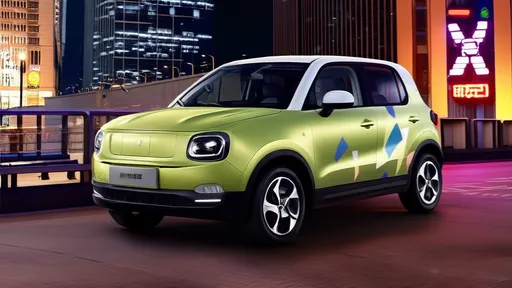
The Wuling Hongguang MINIEV has become a cultural phenomenon in China's automotive market, rewriting the rules of urban mobility with its unbeatable price tag and surprising practicality. What started as a humble electric vehicle (EV) designed for short-distance commuting has evolved into a symbol of smart consumption among young city dwellers. This is the story of how a 30,000-yuan car transformed from a basic people mover to a customizable lifestyle accessory that outsells Tesla in its home market.

When the original MINIEV launched in July 2020, industry analysts dismissed it as another cheap compliance car that would fade into obscurity. But within months, the tiny EV was breaking sales records, moving over 20,000 units monthly while established automakers struggled to move their premium EVs. The secret wasn't just the price—though starting at 28,800 yuan (about $4,000) certainly helped—but rather Wuling's keen understanding of its target audience. Urban millennials didn't need 300-mile range or autonomous driving; they needed an affordable solution for school runs, grocery trips, and weaving through congested city streets.

The design philosophy was brutally pragmatic. At just 2.9 meters long, the MINIEV could squeeze into parking spaces that would give a Smart Fortwo anxiety. Its 17.3 kWh battery delivered a modest 120 km (75 miles) of range—perfectly adequate for daily urban use when charging could be done overnight via standard household outlets. The interior was Spartan by any measure, with manual windows, basic air conditioning, and a digital instrument cluster that looked like it came from a 1990s Casio calculator. Yet these compromises allowed Wuling to hit an unprecedented price point while still meeting safety standards.

What happened next surprised everyone, including Wuling's parent company SAIC. Rather than being seen as a budget compromise, the MINIEV became a canvas for self-expression. Owners—particularly young women in tier-2 and tier-3 cities—began customizing their vehicles with vibrant wraps, cartoon character decals, and interior accessories ranging from fluffy steering wheel covers to LED light strips. Social media platforms like Xiaohongshu exploded with #MINIEV posts showing off these personalized creations, turning the car into a fashion statement. Wuling took notice and quickly launched special editions like the Macaron (with upgraded interiors and two-tone paint options) and the Gameboy Edition (with a more masculine, tech-inspired design).

The aftermarket ecosystem flourished as entrepreneurs recognized the opportunity. Taobao shops began offering thousands of MINIEV-specific accessories, from custom seat covers to miniature spoilers. Some owners installed makeshift sound systems, while others added solar panels to extend range. The modifications became so popular that Wuling started hosting official owner meetups and customization competitions, further fueling the community aspect of MINIEV ownership. This grassroots movement gave the car cultural cachet far beyond its utilitarian origins.

Technological evolution came in measured steps. The 2022 model year brought slightly larger batteries (26.5 kWh) good for 170 km (106 miles) of range, along with an optional slow-charging capability. More significant was the addition of a liquid-cooled battery pack in some variants, addressing early concerns about battery longevity in extreme climates. Safety improvements followed, with a reinforced frame structure and optional front passenger airbag—a response to criticism about the original model's barebones safety features. Yet Wuling wisely avoided the temptation to bloat the MINIEV into a more expensive vehicle, keeping entry-level versions simple and affordable.

The sales numbers tell a staggering success story. In 2021, the MINIEV outsold every other EV in China, including Tesla's Model 3 and Model Y, with over 400,000 units delivered. By mid-2023, cumulative sales surpassed 1 million, making it possibly the best-selling electric vehicle globally when measured by unit volume. The car's success spawned numerous competitors—Chery QQ Ice Cream, Fengguang Mini, and others—but none could match the MINIEV's perfect balance of price, practicality, and personality.

International expansion remains cautious but promising. While rumors persist about exporting the MINIEV to Europe (possibly rebranded as the Freze Froggy) or Southeast Asia, regulatory hurdles and safety standards present challenges. The European version would likely need significant upgrades to meet crash test requirements, potentially eroding the price advantage. Still, the fundamental appeal—a tiny, affordable EV perfect for crowded cities—translates across cultures. In markets where most EVs still carry premium price tags, the MINIEV's value proposition could be disruptive.

Looking ahead, Wuling faces the delicate task of evolving the MINIEV without losing its core identity. Rumors suggest a slightly larger "MINIEV Pro" may debut with 200+ km range and faster charging, but maintaining the sub-50,000 yuan price point will be crucial. More autonomous driving features seem unlikely given the cost constraints, though basic parking assist could appear. One thing seems certain: as cities grow more congested and air quality regulations tighten, the formula pioneered by the MINIEV—small, simple, affordable electric mobility—will only become more relevant.

The MINIEV's legacy may ultimately be in proving that EVs don't need to be high-tech status symbols to succeed. By focusing on fundamental transportation needs and embracing owner customization, Wuling created more than just a car—it spawned a movement that makes electric mobility accessible to millions. In the process, this unassuming little vehicle became an unlikely icon of China's EV revolution.
Recommend Posts
Auto

The Evolution of Wuling Hongguang MINIEV: The 30,000 Yuan Level Commuting Car

By /Jun 15, 2025

The Wuling Hongguang MINIEV has become a cultural phenomenon in China's automotive market, rewriting the rules of urban mobility with its unbeatable price tag and surprising practicality. What started as a humble electric vehicle (EV) designed for short-distance commuting has evolved into a symbol of smart consumption among young city dwellers. This is the story of how a 30,000-yuan car transformed from a basic people mover to a customizable lifestyle accessory that outsells Tesla in its home market.
Auto

Trumpchi M8 Master Edition: A Breakthrough in China's High-End MPV Market

By /Jun 15, 2025

The automotive landscape in China has undergone a remarkable transformation over the past decade, with domestic brands making significant strides in quality, design, and technological innovation. Nowhere is this progress more evident than in the premium MPV segment, where the GAC M8 Master has emerged as a formidable challenger to established international players.
Auto

Zeekr 001: The Breakthrough of Range and Handling in Hunting Coupe"

By /Jun 15, 2025

The automotive world is buzzing with the latest iteration of the Zeekr 001, a vehicle that blurs the lines between a sleek coupe and a practical shooting brake. Dubbed as a "hunting-inspired fastback," this electric marvel is redefining what it means to combine range with razor-sharp handling. Unlike anything else on the market, the Zeekr 001 challenges conventional wisdom by proving that efficiency and exhilaration can coexist without compromise.
Auto

Cadillac CT6: The Technological Comeback of American Luxury

By /Jun 15, 2025

The automotive world has witnessed numerous attempts to redefine luxury, but few have been as ambitious as Cadillac's CT6. This flagship sedan represents more than just another premium offering—it's a bold statement about American ingenuity in an era where German dominance seemed unquestioned. The CT6 arrived at a critical juncture for Cadillac, carrying the weight of proving that Detroit could still produce world-class luxury vehicles while infusing them with cutting-edge technology that would make Silicon Valley proud.
Auto

Volvo S90 T8 PHEV: The Nordic Luxury's Environmental Response

By /Jun 15, 2025

The automotive world is undergoing a seismic shift, and Volvo's S90 T8 plug-in hybrid stands at the intersection of Scandinavian luxury and environmental responsibility. This flagship sedan doesn't just whisper about sustainability—it delivers a compelling argument through its meticulously engineered powertrain and uncompromising attention to detail. Beneath its sleek silhouette lies a complex dance between electric motivation and combustion power, creating a driving experience that feels both effortless and exhilarating.
Auto

Sodium-ion Batteries: The Savior for Low-end Electric Vehicles

By /Jun 15, 2025

The electric vehicle (EV) revolution has long been heralded as the future of transportation, yet its widespread adoption faces a critical roadblock: cost. While lithium-ion batteries dominate the market, their high price tag keeps many budget-conscious consumers at bay. Enter sodium-ion batteries—a promising alternative that could finally make low-end EVs accessible to the masses.
Auto

Software-Defined Cars: Code Lines Surpass Fighter Jets

By /Jun 15, 2025

The automotive industry is undergoing a silent revolution where mechanical engineering is being eclipsed by software engineering at an unprecedented pace. Modern premium vehicles now contain over 150 million lines of code - surpassing the software complexity of advanced fighter jets like the F-35 (which runs on about 25 million lines) by an order of magnitude. This tectonic shift is redefining what constitutes a "well-engineered vehicle" in the 21st century.
Auto

The Localization Dilemma of Car Subscription Services in the Rental Model

By /Jun 15, 2025

The automotive industry's shift toward flexible ownership models has encountered unexpected roadblocks as car subscription services struggle to gain traction outside major metropolitan areas. What was once hailed as the "Netflix of car ownership" now faces complex localization challenges that reveal fundamental differences in transportation needs across geographical markets.
Auto

Parent-child Travel: Convenient Installation and Removal of Safety Seats

By /Jun 15, 2025

Traveling with young children presents a unique set of challenges, and ensuring their safety on the road is paramount. One of the most critical aspects of this is the proper installation and removal of car seats. Parents often struggle with bulky, complicated safety seats that require extensive time and effort to secure correctly. However, recent advancements in design and technology have made the process far more intuitive, allowing for quicker transitions between vehicles or storage.
Auto

Carriage House Living: The Residential Revolution of Mobile Spaces

By /Jun 15, 2025

The open road has always held a certain romantic appeal, but in recent years, a growing movement has transformed this wanderlust into a full-fledged lifestyle revolution. Van life - the practice of living and traveling in converted vehicles - has emerged as more than just an alternative housing option; it represents a fundamental rethinking of how we inhabit space in the modern world.
Auto

Essential Overhaul of Power Interfaces for Car Camping

By /Jun 15, 2025

The growing popularity of car camping has brought a surge of interest in vehicle modifications, particularly when it comes to power supply solutions. Unlike traditional camping, where roughing it is part of the experience, modern car campers demand convenience—especially reliable access to electricity. Whether it’s charging devices, powering a mini-fridge, or running lighting setups, a well-designed power interface is no longer a luxury but a necessity.
Auto

Airbag: Precise Control of Graded Detonation

By /Jun 15, 2025

The evolution of airbag technology has been nothing short of revolutionary in the automotive safety landscape. What began as a simple inflatable cushion has transformed into a sophisticated system capable of adapting to the severity of a collision, the position of occupants, and even the use of seatbelts. At the heart of this advancement lies the concept of staged deployment—a precise, multi-level triggering mechanism that ensures optimal protection while minimizing unnecessary force. This nuanced approach marks a significant departure from the one-size-fits-all solutions of the past.
Auto

The Golden Ratio: Industrial Enchantment of Vehicle Proportions

By /Jun 15, 2025

The automotive industry has long been obsessed with proportions. From the sweeping curves of a 1960s GT to the razor-sharp creases of modern supercars, designers understand that visual harmony isn't accidental—it's mathematical alchemy. At the heart of this obsession lies an ancient principle repurposed for the machine age: the golden ratio.
Auto

Power Distribution: Simulated AWD Techniques for Front-Wheel Drive Platforms

By /Jun 15, 2025

The automotive industry has long been fascinated with the challenge of delivering optimal traction and handling across diverse driving conditions. While all-wheel drive (AWD) systems have traditionally been associated with rear-wheel-drive platforms, a quiet revolution has been brewing in the realm of front-wheel-drive (FWD) architectures. The emergence of sophisticated torque vectoring technologies and electronic control systems has enabled engineers to simulate the benefits of AWD on platforms originally designed for front-wheel propulsion.
Auto

Ladder Utilization of Retired Batteries

By /Jun 15, 2025

As the world accelerates toward a 5G-powered future, an unexpected hero is emerging in the quest for sustainable infrastructure: retired electric vehicle (EV) batteries. Across China and Europe, telecommunications giants are quietly conducting groundbreaking experiments to repurpose these batteries as backup power sources for 5G base stations. This innovative approach not only addresses the growing challenge of battery waste but could potentially reshape the economics of 5G deployment.
Auto

The Disappearance of Racing Girls: Why Was This Centuries-Old Tradition Cancelled?

By /Jun 14, 2025

The disappearance of grid girls from motorsport events marks the end of a century-old tradition that once seemed inseparable from racing culture. For decades, these women stood beside cars in glamorous outfits, holding umbrellas or placards with drivers' names, embodying a spectacle that blended speed with allure. Yet in recent years, major racing series—including Formula 1, Formula E, and the World Endurance Championship—have phased out the practice, citing evolving social values and a push for inclusivity. The decision, while celebrated by some, has sparked debates about tradition, gender roles, and the commodification of beauty in sports.
Auto

The Impact of Racing Games on Reality: GT Academy Produces Real Drivers"

By /Jun 14, 2025

The line between virtual racing and real-world motorsport has been blurring for over a decade, and nowhere is this more evident than in the phenomenon of GT Academy. What began as an unconventional marketing collaboration between Sony, Polyphony Digital, and Nissan has evolved into a legitimate pathway for sim racers to transition into professional racing drivers. The program’s success stories have forced the motorsport industry to reconsider traditional talent scouting methods and acknowledge the validity of esports as a training ground for real-world skills.