The automotive world has witnessed numerous attempts to redefine luxury, but few have been as ambitious as Cadillac's CT6. This flagship sedan represents more than just another premium offering—it's a bold statement about American ingenuity in an era where German dominance seemed unquestioned. The CT6 arrived at a critical juncture for Cadillac, carrying the weight of proving that Detroit could still produce world-class luxury vehicles while infusing them with cutting-edge technology that would make Silicon Valley proud.
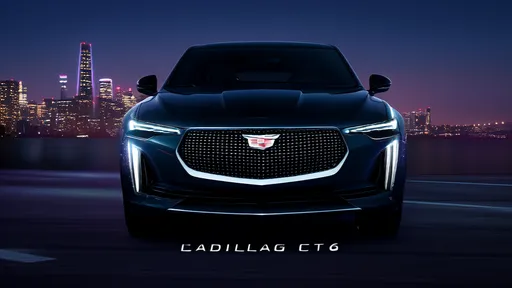
From the moment you approach the CT6, its presence commands attention without resorting to ostentation. The Art and Science design language reaches new maturity here, with sharper creases than previous Cadillacs but better integrated than the angular experiments of the early 2000s. The 20-inch alloy wheels fill the wheel wells perfectly, while the vertical lighting elements—both front and rear—maintain instant brand recognition after dark. What's remarkable is how the design manages to look contemporary without chasing every passing trend, suggesting a confidence that European rivals often reserve for their most expensive limousines.
Beneath the sculpted hood lies one of the CT6's most compelling arguments. The available 4.2-liter Blackwing twin-turbo V8 represents a triumph of American engineering, delivering 550 horsepower without the aid of hybrid systems. This isn't just brute force—the engine features cylinder deactivation and a "hot V" configuration that places turbochargers between cylinder banks for quicker response. The result is acceleration that feels effortless rather than explosive, accompanied by a subdued growl that reminds you there's serious machinery at work. For those prioritizing efficiency, Cadillac offers a 2.0-liter turbo four-cylinder that delivers surprising refinement, proving that downsizing needn't mean downgrading the luxury experience.
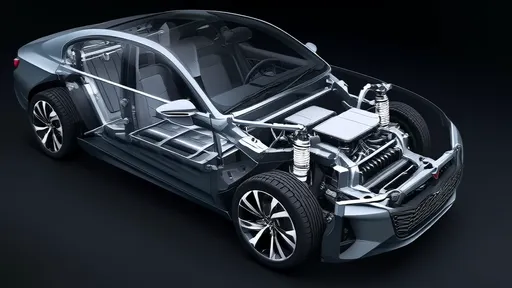
The CT6's chassis technology reads like an engineering thesis on how to make a large sedan handle with precision. The mixed-material structure combines aluminum and high-strength steel in strategic locations, achieving stiffness comparable to much lighter sports cars. Magnetic Ride Control, now in its fourth generation, remains the gold standard for adaptive dampers, reading the road surface every millisecond. What sets the CT6 apart is how these technologies collaborate—the rear-wheel steering system (available on certain trims) works in concert with the stability control to make parking lot maneuvers feel like you're driving a compact car while maintaining perfect stability at triple-digit speeds.
Step inside, and the CT6 presents a compelling counterpoint to the tech-heavy cabins of its German rivals. Cadillac has chosen a more restrained approach, with physical buttons retained for critical functions rather than burying everything in touchscreen submenus. The Opus semi-aniline leather feels substantial without being stiff, and the available 34-speaker AKG Studio Reference audio system delivers concert-hall acoustics. What impresses most is the attention to detail—the way the ambient lighting subtly highlights the genuine wood trim without becoming distracting, or how the active noise cancellation uses precisely timed sound waves to eliminate specific frequencies rather than just drowning out noise with white noise.
Technology in the CT6 serves the driver rather than overwhelming them. The Super Cruise system remains the most confident hands-free driving assistant available, using precise LiDAR mapping and a driver attention monitor to allow genuine relaxation on compatible highways. The night vision system doesn't just detect pedestrians—it can distinguish between animals and humans, displaying warnings in the head-up display that spans nearly the entire windshield. Even the rearview mirror can transform into a video display fed by a roof-mounted camera, eliminating blind spots caused by rear headrests or passengers.
On the road, the CT6 delivers an experience that challenges preconceptions about American luxury cars. The steering provides genuine feedback rather than the over-assisted numbness that plagued previous generations of domestic sedans. The ten-speed automatic transmission shifts with imperceptible smoothness during relaxed driving yet responds to aggressive throttle inputs with decisive downshifts. There's a fluidity to the way the CT6 changes direction that belies its size, aided by near-perfect weight distribution that comes from meticulous engineering rather than afterthought packaging.
What makes the CT6 truly special is how it balances its technological prowess with emotional appeal. This isn't a clinical exercise in spec sheet supremacy—the way the suspension isolates occupants from broken pavement while still communicating essential road textures creates a uniquely American interpretation of luxury. The cabin remains quiet even on coarse concrete highways, yet the sound system can pipe in enhanced engine notes that actually enhance rather than falsify the driving experience. These thoughtful touches demonstrate that Cadillac's engineers understand luxury isn't just about eliminating negatives, but carefully curating positives.
The CT6's pricing strategy reveals Cadillac's ambition. Positioned between the BMW 5 Series and 7 Series in size but priced closer to the former, it offers a compelling value proposition without feeling like a bargain alternative. The Platinum trim level goes toe-to-toe with German luxury flagships in terms of materials and features, yet manages to feel distinctly American in its spatial generosity and straightforward controls. This is a car that respects its European rivals without imitating them, carving out its own identity in a crowded segment.
Perhaps the most significant achievement of the CT6 is how it has forced the industry to reconsider American luxury vehicles. No longer dismissed as overly soft or technologically behind, this Cadillac demonstrates that Detroit can produce sedans with the polish to challenge Stuttgart and Munich. The CT6 succeeds not by copying the established players, but by offering an alternative vision of what modern luxury can be—one that values spacious comfort without sacrificing driving engagement, and advanced technology that enhances rather than complicates the experience.
In an era where SUVs dominate luxury showrooms, the CT6 stands as a reminder of what sedans at their best can achieve. It combines traditional Cadillac strengths like a magic-carpet ride and imposing presence with new-world technologies that set benchmarks rather than follow trends. More than just another luxury car, the CT6 represents the culmination of Cadillac's long journey back to relevance—proof that American automakers can still create vehicles that define rather than follow the standards of global luxury.
The CT6's legacy may ultimately be measured not just by its sales figures, but by how it has reshaped perceptions. Where previous American luxury cars often felt like regional alternatives to imported premium vehicles, this Cadillac demands evaluation on its own terms. It's a machine that rewards those who appreciate thoughtful engineering executed with confidence—a proper flagship that just happens to carry the Cadillac crest. In the CT6, we find not just an excellent luxury sedan, but a compelling argument for American automotive excellence in the 21st century.

By /Jun 15, 2025
By /Jun 15, 2025
By /Jun 15, 2025
By /Jun 15, 2025
By /Jun 15, 2025

By /Jun 15, 2025

By /Jun 15, 2025

By /Jun 15, 2025

By /Jun 15, 2025

By /Jun 15, 2025

By /Jun 15, 2025
By /Jun 15, 2025

By /Jun 15, 2025
By /Jun 15, 2025

By /Jun 15, 2025

By /Jun 14, 2025

By /Jun 14, 2025
