Power Distribution: Simulated AWD Techniques for Front-Wheel Drive Platforms

Jun 15, 2025 By

The automotive industry has long been fascinated with the challenge of delivering optimal traction and handling across diverse driving conditions. While all-wheel drive (AWD) systems have traditionally been associated with rear-wheel-drive platforms, a quiet revolution has been brewing in the realm of front-wheel-drive (FWD) architectures. The emergence of sophisticated torque vectoring technologies and electronic control systems has enabled engineers to simulate the benefits of AWD on platforms originally designed for front-wheel propulsion.

At the heart of this innovation lies a fundamental rethinking of how power can be intelligently distributed to wheels that weren't originally intended to be driven. Modern FWD-based vehicles are increasingly employing clever torque vectoring solutions that go beyond simple on-demand clutch systems. These advanced setups can not only send power rearward when needed but can also actively manage the torque split between individual wheels to enhance cornering stability and traction.

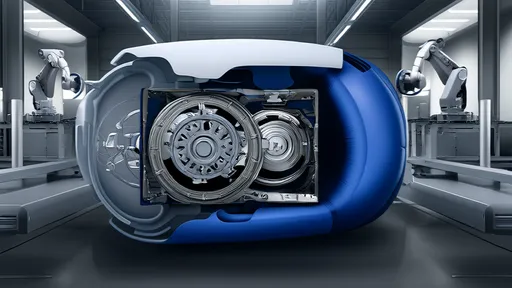
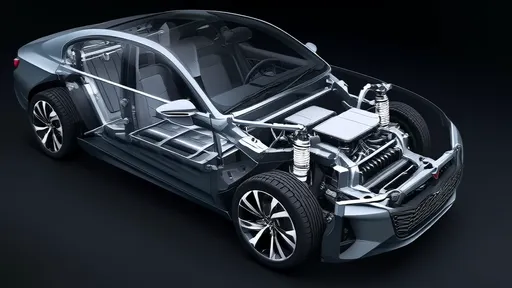
The mechanical constraints of FWD platforms present unique challenges for AWD simulation. Unlike traditional longitudinal engine layouts where power can be relatively easily routed to a rear differential, transverse-mounted engines in FWD vehicles require more complex solutions. Engineers have developed compact power take-off units that can siphon torque from the front differential and redirect it through a prop shaft to the rear axle. The real magic happens in how this torque transfer is managed dynamically based on driving conditions.

Modern implementations use a combination of wheel speed sensors, yaw rate detectors, and steering angle inputs to calculate the optimal torque distribution hundreds of times per second. When the system detects front wheel slip during acceleration, it can engage the rear axle within milliseconds. More impressively, some systems can preemptively transfer torque based on predictive algorithms that analyze driver inputs and road conditions before slip actually occurs.

One of the most significant breakthroughs has been the development of active rear differentials that can not only engage but also vector torque side-to-side. This capability transforms what was once a simple on-off AWD simulation into a truly sophisticated handling aid. During cornering, these systems can apply more torque to the outside rear wheel, effectively creating a torque vectoring effect that helps rotate the vehicle into the turn. The result is handling characteristics that begin to approach those of more expensive rear-biased AWD systems.

The advantages of these FWD-based AWD simulations extend beyond just traction. By carefully managing torque distribution, engineers can influence vehicle dynamics in ways that improve both safety and performance. Understeer, the traditional bane of front-wheel-drive vehicles, can be mitigated by the strategic application of rear torque. Similarly, stability in slippery conditions can be dramatically improved without the weight penalty of traditional full-time AWD systems.

Fuel efficiency considerations have driven much of the innovation in this field. Traditional full-time AWD systems typically impose a 5-10% fuel economy penalty due to increased driveline friction and weight. The new generation of FWD-based systems maintains the front-wheel-drive efficiency advantage during steady-state cruising while only engaging the rear wheels when necessary. Some implementations can completely disconnect the rear driveline when AWD capability isn't needed, eliminating parasitic losses entirely.

The evolution of these systems has been closely tied to advancements in electronic controls and actuator technology. Early systems relied on hydraulic clutches that were slow to respond and imprecise in their torque application. Modern implementations use electromagnetic clutches that can modulate torque transfer with far greater precision and speed. This allows for more nuanced torque distribution strategies that can adapt to everything from low-traction launches to high-speed lane changes.

Looking ahead, the line between traditional AWD and these advanced FWD-based simulations continues to blur. Some manufacturers are experimenting with fully independent electric motor drives for the rear wheels, eliminating the need for mechanical linkages altogether. These e-AWD systems represent the next evolutionary step, offering even faster response times and more precise torque control while maintaining the packaging advantages of FWD platforms.

The implications for vehicle design are profound. Automakers can now offer AWD capability without the substantial redesign typically required to accommodate a traditional transfer case and longitudinal driveline. This flexibility allows for more efficient platform sharing across model lines and enables AWD availability in vehicle segments where it was previously impractical or cost-prohibitive.

As these technologies continue to mature, we're seeing them trickle down from premium vehicles into more mainstream offerings. What was once exclusive to high-performance variants is now becoming available on family crossovers and compact cars. This democratization of advanced traction technology promises to make all-weather capability accessible to a much broader range of consumers.

The future of FWD-based AWD simulation likely lies in even greater integration with vehicle dynamics control systems. Imagine a system that not only manages torque distribution but also coordinates with the stability control, steering assist, and even suspension damping to create a seamless driving experience. As processing power increases and algorithms become more sophisticated, these systems will become increasingly transparent to the driver while providing ever-greater benefits in safety and performance.

While purists may argue that these simulated systems can't match the balanced feel of a true rear-biased AWD layout, the performance gap continues to narrow. For the vast majority of drivers in real-world conditions, these FWD-based solutions deliver nearly all the benefits of traditional AWD without the compromises. As the technology evolves, it may well redefine our very understanding of what all-wheel drive can be.
Recommend Posts
Auto

The Evolution of Wuling Hongguang MINIEV: The 30,000 Yuan Level Commuting Car

By /Jun 15, 2025

The Wuling Hongguang MINIEV has become a cultural phenomenon in China's automotive market, rewriting the rules of urban mobility with its unbeatable price tag and surprising practicality. What started as a humble electric vehicle (EV) designed for short-distance commuting has evolved into a symbol of smart consumption among young city dwellers. This is the story of how a 30,000-yuan car transformed from a basic people mover to a customizable lifestyle accessory that outsells Tesla in its home market.
Auto

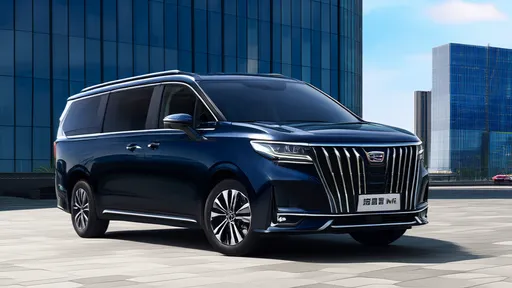
Trumpchi M8 Master Edition: A Breakthrough in China's High-End MPV Market

By /Jun 15, 2025

The automotive landscape in China has undergone a remarkable transformation over the past decade, with domestic brands making significant strides in quality, design, and technological innovation. Nowhere is this progress more evident than in the premium MPV segment, where the GAC M8 Master has emerged as a formidable challenger to established international players.
Auto

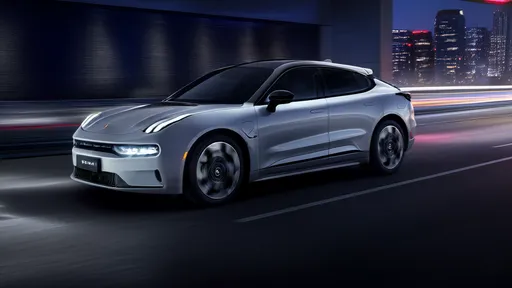
Zeekr 001: The Breakthrough of Range and Handling in Hunting Coupe"

By /Jun 15, 2025

The automotive world is buzzing with the latest iteration of the Zeekr 001, a vehicle that blurs the lines between a sleek coupe and a practical shooting brake. Dubbed as a "hunting-inspired fastback," this electric marvel is redefining what it means to combine range with razor-sharp handling. Unlike anything else on the market, the Zeekr 001 challenges conventional wisdom by proving that efficiency and exhilaration can coexist without compromise.
Auto

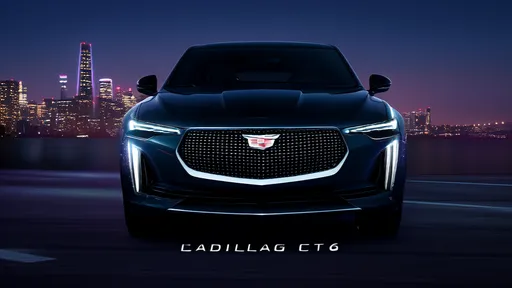
Cadillac CT6: The Technological Comeback of American Luxury

By /Jun 15, 2025

The automotive world has witnessed numerous attempts to redefine luxury, but few have been as ambitious as Cadillac's CT6. This flagship sedan represents more than just another premium offering—it's a bold statement about American ingenuity in an era where German dominance seemed unquestioned. The CT6 arrived at a critical juncture for Cadillac, carrying the weight of proving that Detroit could still produce world-class luxury vehicles while infusing them with cutting-edge technology that would make Silicon Valley proud.
Auto

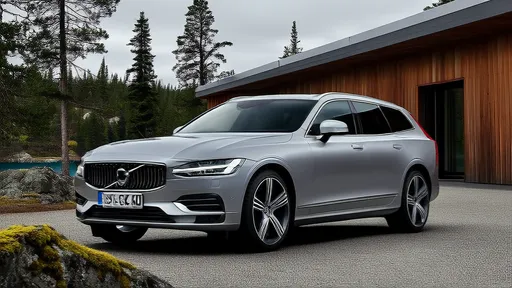
Volvo S90 T8 PHEV: The Nordic Luxury's Environmental Response

By /Jun 15, 2025

The automotive world is undergoing a seismic shift, and Volvo's S90 T8 plug-in hybrid stands at the intersection of Scandinavian luxury and environmental responsibility. This flagship sedan doesn't just whisper about sustainability—it delivers a compelling argument through its meticulously engineered powertrain and uncompromising attention to detail. Beneath its sleek silhouette lies a complex dance between electric motivation and combustion power, creating a driving experience that feels both effortless and exhilarating.
Auto

Sodium-ion Batteries: The Savior for Low-end Electric Vehicles

By /Jun 15, 2025

The electric vehicle (EV) revolution has long been heralded as the future of transportation, yet its widespread adoption faces a critical roadblock: cost. While lithium-ion batteries dominate the market, their high price tag keeps many budget-conscious consumers at bay. Enter sodium-ion batteries—a promising alternative that could finally make low-end EVs accessible to the masses.
Auto

Software-Defined Cars: Code Lines Surpass Fighter Jets

By /Jun 15, 2025

The automotive industry is undergoing a silent revolution where mechanical engineering is being eclipsed by software engineering at an unprecedented pace. Modern premium vehicles now contain over 150 million lines of code - surpassing the software complexity of advanced fighter jets like the F-35 (which runs on about 25 million lines) by an order of magnitude. This tectonic shift is redefining what constitutes a "well-engineered vehicle" in the 21st century.
Auto

The Localization Dilemma of Car Subscription Services in the Rental Model

By /Jun 15, 2025

The automotive industry's shift toward flexible ownership models has encountered unexpected roadblocks as car subscription services struggle to gain traction outside major metropolitan areas. What was once hailed as the "Netflix of car ownership" now faces complex localization challenges that reveal fundamental differences in transportation needs across geographical markets.
Auto

Parent-child Travel: Convenient Installation and Removal of Safety Seats

By /Jun 15, 2025

Traveling with young children presents a unique set of challenges, and ensuring their safety on the road is paramount. One of the most critical aspects of this is the proper installation and removal of car seats. Parents often struggle with bulky, complicated safety seats that require extensive time and effort to secure correctly. However, recent advancements in design and technology have made the process far more intuitive, allowing for quicker transitions between vehicles or storage.
Auto

Carriage House Living: The Residential Revolution of Mobile Spaces

By /Jun 15, 2025

The open road has always held a certain romantic appeal, but in recent years, a growing movement has transformed this wanderlust into a full-fledged lifestyle revolution. Van life - the practice of living and traveling in converted vehicles - has emerged as more than just an alternative housing option; it represents a fundamental rethinking of how we inhabit space in the modern world.
Auto

Essential Overhaul of Power Interfaces for Car Camping

By /Jun 15, 2025

The growing popularity of car camping has brought a surge of interest in vehicle modifications, particularly when it comes to power supply solutions. Unlike traditional camping, where roughing it is part of the experience, modern car campers demand convenience—especially reliable access to electricity. Whether it’s charging devices, powering a mini-fridge, or running lighting setups, a well-designed power interface is no longer a luxury but a necessity.
Auto

Airbag: Precise Control of Graded Detonation

By /Jun 15, 2025

The evolution of airbag technology has been nothing short of revolutionary in the automotive safety landscape. What began as a simple inflatable cushion has transformed into a sophisticated system capable of adapting to the severity of a collision, the position of occupants, and even the use of seatbelts. At the heart of this advancement lies the concept of staged deployment—a precise, multi-level triggering mechanism that ensures optimal protection while minimizing unnecessary force. This nuanced approach marks a significant departure from the one-size-fits-all solutions of the past.
Auto

The Golden Ratio: Industrial Enchantment of Vehicle Proportions

By /Jun 15, 2025

The automotive industry has long been obsessed with proportions. From the sweeping curves of a 1960s GT to the razor-sharp creases of modern supercars, designers understand that visual harmony isn't accidental—it's mathematical alchemy. At the heart of this obsession lies an ancient principle repurposed for the machine age: the golden ratio.
Auto

Power Distribution: Simulated AWD Techniques for Front-Wheel Drive Platforms

By /Jun 15, 2025

The automotive industry has long been fascinated with the challenge of delivering optimal traction and handling across diverse driving conditions. While all-wheel drive (AWD) systems have traditionally been associated with rear-wheel-drive platforms, a quiet revolution has been brewing in the realm of front-wheel-drive (FWD) architectures. The emergence of sophisticated torque vectoring technologies and electronic control systems has enabled engineers to simulate the benefits of AWD on platforms originally designed for front-wheel propulsion.
Auto

Ladder Utilization of Retired Batteries

By /Jun 15, 2025

As the world accelerates toward a 5G-powered future, an unexpected hero is emerging in the quest for sustainable infrastructure: retired electric vehicle (EV) batteries. Across China and Europe, telecommunications giants are quietly conducting groundbreaking experiments to repurpose these batteries as backup power sources for 5G base stations. This innovative approach not only addresses the growing challenge of battery waste but could potentially reshape the economics of 5G deployment.
Auto

The Disappearance of Racing Girls: Why Was This Centuries-Old Tradition Cancelled?

By /Jun 14, 2025

The disappearance of grid girls from motorsport events marks the end of a century-old tradition that once seemed inseparable from racing culture. For decades, these women stood beside cars in glamorous outfits, holding umbrellas or placards with drivers' names, embodying a spectacle that blended speed with allure. Yet in recent years, major racing series—including Formula 1, Formula E, and the World Endurance Championship—have phased out the practice, citing evolving social values and a push for inclusivity. The decision, while celebrated by some, has sparked debates about tradition, gender roles, and the commodification of beauty in sports.
Auto

The Impact of Racing Games on Reality: GT Academy Produces Real Drivers"

By /Jun 14, 2025

The line between virtual racing and real-world motorsport has been blurring for over a decade, and nowhere is this more evident than in the phenomenon of GT Academy. What began as an unconventional marketing collaboration between Sony, Polyphony Digital, and Nissan has evolved into a legitimate pathway for sim racers to transition into professional racing drivers. The program’s success stories have forced the motorsport industry to reconsider traditional talent scouting methods and acknowledge the validity of esports as a training ground for real-world skills.