Carriage House Living: The Residential Revolution of Mobile Spaces

Jun 15, 2025 By

The open road has always held a certain romantic appeal, but in recent years, a growing movement has transformed this wanderlust into a full-fledged lifestyle revolution. Van life - the practice of living and traveling in converted vehicles - has emerged as more than just an alternative housing option; it represents a fundamental rethinking of how we inhabit space in the modern world.

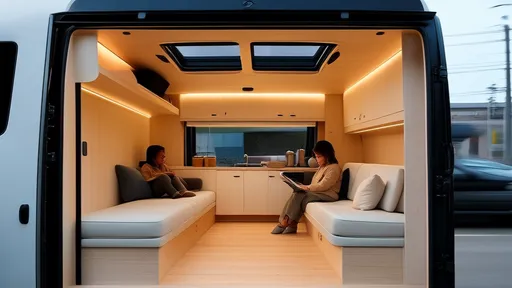
What began as a niche subculture among surfers, climbers, and free spirits has blossomed into a global phenomenon. Social media platforms overflow with meticulously curated images of wood-paneled interiors, fold-out desks beside panoramic windows, and compact kitchens that would make any urban apartment dweller envious. Yet beneath this Instagram-ready surface lies a profound cultural shift challenging conventional notions of home, community, and the very meaning of rootedness.

The origins of contemporary van life trace back to multiple cultural currents converging at once. The 2008 financial crisis left many disillusioned with traditional paths to homeownership. Simultaneously, remote work technologies matured just as environmental concerns made conspicuous consumption increasingly unpalatable to younger generations. Into this perfect storm stepped a new breed of nomads, proving that one could indeed have both adventure and stability - just not in the ways society had previously prescribed.

Modern van conversions showcase astonishing ingenuity in spatial design. Where once these vehicles offered little more than a cramped bed and storage cubbies, today's builds incorporate solar arrays, composting toilets, and space-saving solutions that would impress even the most seasoned yacht designer. The typical layout - bed platform above a garage space, kitchen galley along one wall, and convertible seating area - has become something of a template, though personalization remains key. After all, when your entire world fits into 60 square feet, every inch must reflect your priorities.

This movement isn't merely about downsizing physical possessions - it necessitates a wholesale reconsideration of what we consider essential. Veteran van lifers speak of the "two-week rule": if you haven't used an item in fourteen days, it probably doesn't merit precious real estate in your mobile abode. Such constraints breed creativity; a single saucepan becomes a mixing bowl, a plate doubles as a cutting board, and the entire world serves as your living room.

The environmental arguments for van life prove compelling, if somewhat nuanced. Certainly, a well-insulated van with solar power consumes far fewer resources than a traditional home. Many converts report dramatic reductions in water usage and electricity consumption. Yet the diesel required for constant travel complicates the sustainability equation, prompting some to adopt a "slow travel" approach, staying weeks or months in each location rather than compulsively chasing horizons.

Psychological adaptations may prove more challenging than the physical ones. Humans are creatures of habit, and van life relentlessly disrupts routines most take for granted. Simple acts like answering nature's call become logistical puzzles when you're parked in a city center. Privacy exists on a spectrum rather than as a binary condition. Yet practitioners report unexpected benefits - heightened presence, deepened connections with travel partners, and a visceral sense of freedom that cubicle dwellers can scarcely imagine.

The digital nomad wave has turbocharged van life's popularity. With reliable internet available through satellite systems and cellular boosters, professionals from software developers to graphic designers now file reports and attend Zoom meetings from canyon rims and coastal bluffs. This workforce mobility raises fascinating questions about the future of urban centers and corporate office culture. Why pay exorbitant rent when your morning view could alternate between redwood forests and desert mesas?

Community aspects of van life evolve in fascinating ways. Unlike traditional neighborhoods bound by geography, the nomadic tribe congregates through apps like iOverlander, sharing tips about free campsites and fresh water sources. Seasonal gatherings like the Rubber Tramp Rendezvous in Arizona create temporary villages where knowledge transfers between generations of mobile dwellers. This fluid social structure - intense connections followed by solitary stretches - suits those who crave both fellowship and autonomy.

Economic realities underpin much of this movement. With housing costs skyrocketing in desirable areas, van life offers an end-run around unaffordable real estate markets. The math often proves persuasive: why sink $3,000 monthly into a cramped apartment when a $30,000 van conversion (or far less for the DIY-inclined) provides both shelter and transportation? This calculus grows even more compelling for those willing to embrace extreme minimalism in their builds.

Mainstream acceptance continues growing, though not without friction. Some municipalities have cracked down on overnight parking, citing concerns about waste disposal and neighborhood character. Meanwhile, the outdoor industry has wholeheartedly embraced van lifers as a core demographic, with companies offering everything from custom suspension upgrades to compact espresso machines tailored for mobile living. This commercialization walks a fine line between supporting the lifestyle and diluting its countercultural roots.

The COVID-19 pandemic accelerated van life adoption dramatically, as remote work policies collided with cabin fever. Suddenly, professionals who might never have considered mobile living found themselves untethered from offices, free to roam while maintaining careers. Rental companies reported shortages of camper vans as urbanites sought socially-distanced escapes. Many of these pandemic converts have remained on the road, suggesting this trend reflects more than temporary wanderlust.

Technological advancements continue expanding van life's possibilities. Lithium battery systems now store enough solar energy to power induction cooktops and even small air conditioning units. Starlink satellite internet brings broadband speeds to remote locations. Advanced water filtration systems make boondocking (off-grid camping) feasible for extended periods. Each innovation removes another barrier to comfortable mobile living, inviting new demographics to join the movement.

Yet challenges persist. Healthcare access remains complicated for those constantly crossing state lines or national borders. Vehicle breakdowns carry higher stakes when your home sits on four wheels. Zoning laws and parking restrictions create constant uncertainty. And the romantic social media portrayal often glosses over less photogenic realities like emptying cassette toilets or enduring heat waves in a metal box.

The philosophical implications of van life may ultimately prove its most lasting contribution. By decoupling the concepts of "home" and "permanent structure," this lifestyle invites broader questions about how we allocate space in an increasingly crowded world. It challenges the assumption that adulthood must involve accumulating square footage and long-term mortgages. Perhaps most radically, it suggests that security might come not from fixed addresses, but from self-reliance and adaptability.

As climate change and economic instability reshape traditional living patterns, van life's lessons about flexible housing and low-impact existence may become increasingly relevant. The movement has already inspired architectural experiments in micro-housing and adaptive reuse of urban spaces. Its emphasis on experiential wealth over material accumulation resonates with younger generations facing diminished economic prospects.

Whether as full-time commitment or occasional escape, van life has permanently expanded our housing imagination. It reminds us that dwellings need not be static to be nurturing, that community transcends geography, and that the entire planet remains available to those willing to live lightly upon it. The road ahead remains unwritten, but one thing seems certain: the revolution in mobile living has only just begun.
Recommend Posts
Auto

The Evolution of Wuling Hongguang MINIEV: The 30,000 Yuan Level Commuting Car

By /Jun 15, 2025

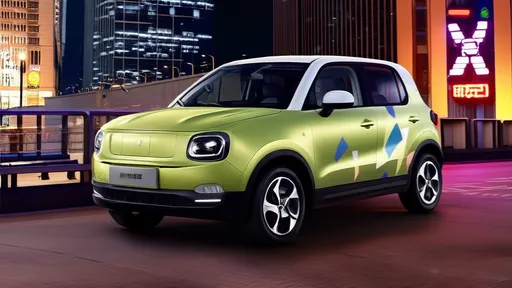
The Wuling Hongguang MINIEV has become a cultural phenomenon in China's automotive market, rewriting the rules of urban mobility with its unbeatable price tag and surprising practicality. What started as a humble electric vehicle (EV) designed for short-distance commuting has evolved into a symbol of smart consumption among young city dwellers. This is the story of how a 30,000-yuan car transformed from a basic people mover to a customizable lifestyle accessory that outsells Tesla in its home market.
Auto

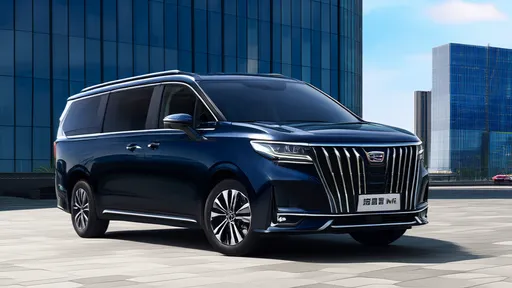
Trumpchi M8 Master Edition: A Breakthrough in China's High-End MPV Market

By /Jun 15, 2025

The automotive landscape in China has undergone a remarkable transformation over the past decade, with domestic brands making significant strides in quality, design, and technological innovation. Nowhere is this progress more evident than in the premium MPV segment, where the GAC M8 Master has emerged as a formidable challenger to established international players.
Auto

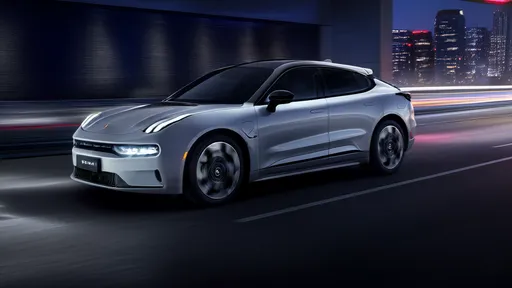
Zeekr 001: The Breakthrough of Range and Handling in Hunting Coupe"

By /Jun 15, 2025

The automotive world is buzzing with the latest iteration of the Zeekr 001, a vehicle that blurs the lines between a sleek coupe and a practical shooting brake. Dubbed as a "hunting-inspired fastback," this electric marvel is redefining what it means to combine range with razor-sharp handling. Unlike anything else on the market, the Zeekr 001 challenges conventional wisdom by proving that efficiency and exhilaration can coexist without compromise.
Auto

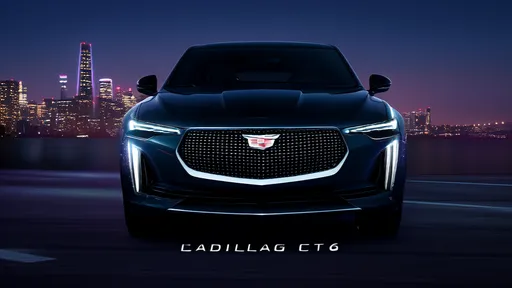
Cadillac CT6: The Technological Comeback of American Luxury

By /Jun 15, 2025

The automotive world has witnessed numerous attempts to redefine luxury, but few have been as ambitious as Cadillac's CT6. This flagship sedan represents more than just another premium offering—it's a bold statement about American ingenuity in an era where German dominance seemed unquestioned. The CT6 arrived at a critical juncture for Cadillac, carrying the weight of proving that Detroit could still produce world-class luxury vehicles while infusing them with cutting-edge technology that would make Silicon Valley proud.
Auto

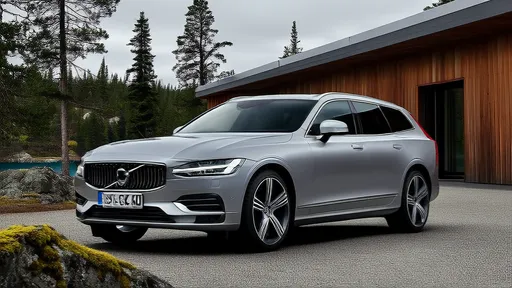
Volvo S90 T8 PHEV: The Nordic Luxury's Environmental Response

By /Jun 15, 2025

The automotive world is undergoing a seismic shift, and Volvo's S90 T8 plug-in hybrid stands at the intersection of Scandinavian luxury and environmental responsibility. This flagship sedan doesn't just whisper about sustainability—it delivers a compelling argument through its meticulously engineered powertrain and uncompromising attention to detail. Beneath its sleek silhouette lies a complex dance between electric motivation and combustion power, creating a driving experience that feels both effortless and exhilarating.
Auto

Sodium-ion Batteries: The Savior for Low-end Electric Vehicles

By /Jun 15, 2025

The electric vehicle (EV) revolution has long been heralded as the future of transportation, yet its widespread adoption faces a critical roadblock: cost. While lithium-ion batteries dominate the market, their high price tag keeps many budget-conscious consumers at bay. Enter sodium-ion batteries—a promising alternative that could finally make low-end EVs accessible to the masses.
Auto

Software-Defined Cars: Code Lines Surpass Fighter Jets

By /Jun 15, 2025

The automotive industry is undergoing a silent revolution where mechanical engineering is being eclipsed by software engineering at an unprecedented pace. Modern premium vehicles now contain over 150 million lines of code - surpassing the software complexity of advanced fighter jets like the F-35 (which runs on about 25 million lines) by an order of magnitude. This tectonic shift is redefining what constitutes a "well-engineered vehicle" in the 21st century.
Auto

The Localization Dilemma of Car Subscription Services in the Rental Model

By /Jun 15, 2025

The automotive industry's shift toward flexible ownership models has encountered unexpected roadblocks as car subscription services struggle to gain traction outside major metropolitan areas. What was once hailed as the "Netflix of car ownership" now faces complex localization challenges that reveal fundamental differences in transportation needs across geographical markets.
Auto

Parent-child Travel: Convenient Installation and Removal of Safety Seats

By /Jun 15, 2025

Traveling with young children presents a unique set of challenges, and ensuring their safety on the road is paramount. One of the most critical aspects of this is the proper installation and removal of car seats. Parents often struggle with bulky, complicated safety seats that require extensive time and effort to secure correctly. However, recent advancements in design and technology have made the process far more intuitive, allowing for quicker transitions between vehicles or storage.
Auto

Carriage House Living: The Residential Revolution of Mobile Spaces

By /Jun 15, 2025

The open road has always held a certain romantic appeal, but in recent years, a growing movement has transformed this wanderlust into a full-fledged lifestyle revolution. Van life - the practice of living and traveling in converted vehicles - has emerged as more than just an alternative housing option; it represents a fundamental rethinking of how we inhabit space in the modern world.
Auto

Essential Overhaul of Power Interfaces for Car Camping

By /Jun 15, 2025

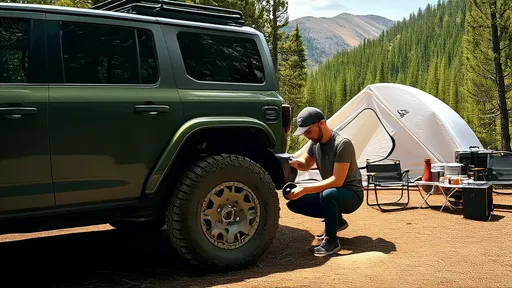
The growing popularity of car camping has brought a surge of interest in vehicle modifications, particularly when it comes to power supply solutions. Unlike traditional camping, where roughing it is part of the experience, modern car campers demand convenience—especially reliable access to electricity. Whether it’s charging devices, powering a mini-fridge, or running lighting setups, a well-designed power interface is no longer a luxury but a necessity.
Auto

Airbag: Precise Control of Graded Detonation

By /Jun 15, 2025

The evolution of airbag technology has been nothing short of revolutionary in the automotive safety landscape. What began as a simple inflatable cushion has transformed into a sophisticated system capable of adapting to the severity of a collision, the position of occupants, and even the use of seatbelts. At the heart of this advancement lies the concept of staged deployment—a precise, multi-level triggering mechanism that ensures optimal protection while minimizing unnecessary force. This nuanced approach marks a significant departure from the one-size-fits-all solutions of the past.
Auto

The Golden Ratio: Industrial Enchantment of Vehicle Proportions

By /Jun 15, 2025

The automotive industry has long been obsessed with proportions. From the sweeping curves of a 1960s GT to the razor-sharp creases of modern supercars, designers understand that visual harmony isn't accidental—it's mathematical alchemy. At the heart of this obsession lies an ancient principle repurposed for the machine age: the golden ratio.
Auto

Power Distribution: Simulated AWD Techniques for Front-Wheel Drive Platforms

By /Jun 15, 2025

The automotive industry has long been fascinated with the challenge of delivering optimal traction and handling across diverse driving conditions. While all-wheel drive (AWD) systems have traditionally been associated with rear-wheel-drive platforms, a quiet revolution has been brewing in the realm of front-wheel-drive (FWD) architectures. The emergence of sophisticated torque vectoring technologies and electronic control systems has enabled engineers to simulate the benefits of AWD on platforms originally designed for front-wheel propulsion.
Auto

Ladder Utilization of Retired Batteries

By /Jun 15, 2025

As the world accelerates toward a 5G-powered future, an unexpected hero is emerging in the quest for sustainable infrastructure: retired electric vehicle (EV) batteries. Across China and Europe, telecommunications giants are quietly conducting groundbreaking experiments to repurpose these batteries as backup power sources for 5G base stations. This innovative approach not only addresses the growing challenge of battery waste but could potentially reshape the economics of 5G deployment.
Auto

The Disappearance of Racing Girls: Why Was This Centuries-Old Tradition Cancelled?

By /Jun 14, 2025

The disappearance of grid girls from motorsport events marks the end of a century-old tradition that once seemed inseparable from racing culture. For decades, these women stood beside cars in glamorous outfits, holding umbrellas or placards with drivers' names, embodying a spectacle that blended speed with allure. Yet in recent years, major racing series—including Formula 1, Formula E, and the World Endurance Championship—have phased out the practice, citing evolving social values and a push for inclusivity. The decision, while celebrated by some, has sparked debates about tradition, gender roles, and the commodification of beauty in sports.
Auto

The Impact of Racing Games on Reality: GT Academy Produces Real Drivers"

By /Jun 14, 2025

The line between virtual racing and real-world motorsport has been blurring for over a decade, and nowhere is this more evident than in the phenomenon of GT Academy. What began as an unconventional marketing collaboration between Sony, Polyphony Digital, and Nissan has evolved into a legitimate pathway for sim racers to transition into professional racing drivers. The program’s success stories have forced the motorsport industry to reconsider traditional talent scouting methods and acknowledge the validity of esports as a training ground for real-world skills.