Ladder Utilization of Retired Batteries

Jun 15, 2025 By

The Rise of Second-Life Batteries: Powering the 5G Revolution

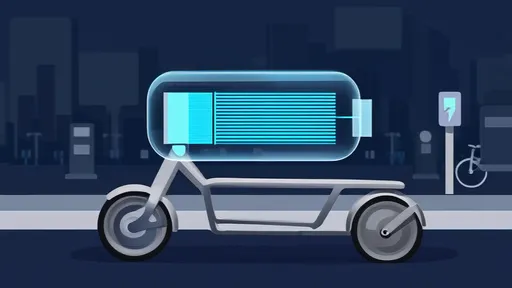
As the world accelerates toward a 5G-powered future, an unexpected hero is emerging in the quest for sustainable infrastructure: retired electric vehicle (EV) batteries. Across China and Europe, telecommunications giants are quietly conducting groundbreaking experiments to repurpose these batteries as backup power sources for 5G base stations. This innovative approach not only addresses the growing challenge of battery waste but could potentially reshape the economics of 5G deployment.

A Circular Economy Solution

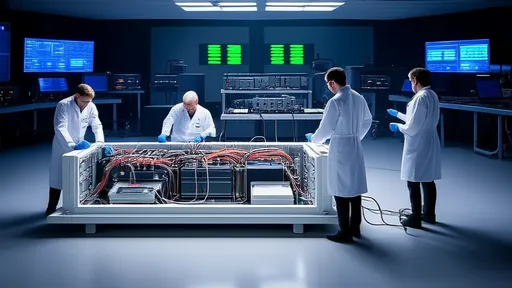
The numbers are staggering. By 2030, analysts predict over 11 million metric tons of lithium-ion batteries will retire from electric vehicles worldwide. Rather than consigning these batteries to landfills, engineers have discovered they retain 70-80% of their original capacity - more than enough for the demanding but less intensive needs of telecom backup systems. At a pilot site in Guangdong Province, technicians have successfully integrated repurposed EV battery packs with a 5G base station's power management system, creating a seamless fail-safe during grid outages.

What makes this solution particularly compelling is its economic viability. Traditional lead-acid batteries, while cheaper upfront, require replacement every 3-5 years. Second-life lithium batteries, by contrast, can deliver an additional 7-10 years of service in this less strenuous application. When factoring in the reduced maintenance and longer lifespan, the total cost of ownership becomes competitive - a fact that hasn't gone unnoticed by CFOs at major telecom operators.

Technical Breakthroughs and Challenges

The implementation isn't without hurdles. Battery packs from different manufacturers - and even different vehicle models - exhibit variations in chemistry, capacity, and degradation patterns. Engineers at Huawei's Shanghai lab have developed sophisticated battery management algorithms that can "learn" each cell's characteristics and optimize performance accordingly. Their system continuously monitors over 15 parameters per battery module, adjusting charge/discharge cycles to maximize both safety and longevity.

Perhaps the most significant technical achievement has been the development of modular architecture. Unlike EV applications where batteries work as a single integrated unit, the telecom solution breaks them into smaller, independently functioning modules. This design allows the system to continue operating even if individual modules fail - a critical reliability feature for mission-critical communications infrastructure.

Environmental Impact Multiplier

The environmental benefits extend far beyond waste reduction. A single 5G base station equipped with second-life batteries can reduce annual carbon emissions by approximately 12 metric tons compared to diesel generators - the current backup solution in many regions. When scaled across China's estimated 6 million future 5G base stations, the potential emission savings rival taking 5 million cars off the road permanently.

Water conservation presents another unexpected advantage. Lead-acid battery production is notoriously water-intensive, requiring about 15 liters per kWh of capacity. By extending the usable life of existing lithium batteries, the water footprint of telecom backup systems plummets by nearly 90%. These environmental co-benefits are helping the technology gain traction in water-scarce regions like India and the Middle East.

Regulatory Tailwinds

Governments are taking notice. The European Union's new Battery Regulation, set to take effect in 2025, establishes stringent recycling targets and explicitly encourages second-life applications. China's MIIT has included battery repurposing in its latest 5G infrastructure guidelines, offering tax incentives for operators who adopt the technology. These policy signals are providing the certainty needed for larger-scale investments in battery refurbishment facilities.

Industry standards are evolving rapidly too. The IEEE is expected to publish the first international safety standard for second-life battery systems in telecom applications by mid-2024. This framework will address critical concerns around fire prevention, performance testing protocols, and end-of-life management - removing a major barrier to widespread adoption.

The Road Ahead

While current experiments focus on backup power, forward-looking operators are exploring more ambitious applications. In Sweden, Ericsson is testing a system where base stations with second-life batteries participate in grid frequency regulation during normal operation, creating an additional revenue stream. Chinese researchers are investigating how these distributed battery networks could form virtual power plants, helping balance renewable energy fluctuations.

The coming years will likely see the emergence of specialized battery refurbishment ecosystems. Startups are developing AI-powered diagnostic tools that can assess battery health in minutes rather than hours. Logistics companies are designing reverse supply chains to efficiently transport retired EV batteries to refurbishment centers. This entire value chain could generate over $15 billion in annual revenue by 2030 according to BloombergNEF estimates.

As 5G networks expand into rural and remote areas where grid power is unreliable, the business case for second-life batteries grows stronger. Their higher energy density makes them ideal for locations where space is constrained, while their maintenance-free operation reduces the need for costly technician visits. What began as an experiment in sustainability is fast becoming a strategic imperative for the telecom industry's next chapter.
Recommend Posts
Auto

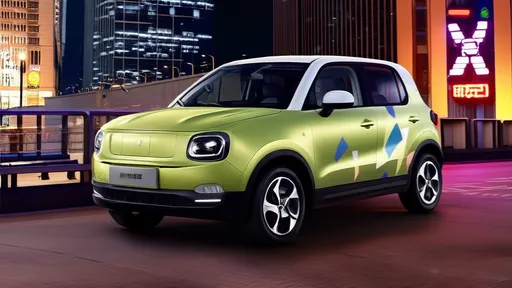
The Evolution of Wuling Hongguang MINIEV: The 30,000 Yuan Level Commuting Car

By /Jun 15, 2025

The Wuling Hongguang MINIEV has become a cultural phenomenon in China's automotive market, rewriting the rules of urban mobility with its unbeatable price tag and surprising practicality. What started as a humble electric vehicle (EV) designed for short-distance commuting has evolved into a symbol of smart consumption among young city dwellers. This is the story of how a 30,000-yuan car transformed from a basic people mover to a customizable lifestyle accessory that outsells Tesla in its home market.
Auto

Trumpchi M8 Master Edition: A Breakthrough in China's High-End MPV Market

By /Jun 15, 2025

The automotive landscape in China has undergone a remarkable transformation over the past decade, with domestic brands making significant strides in quality, design, and technological innovation. Nowhere is this progress more evident than in the premium MPV segment, where the GAC M8 Master has emerged as a formidable challenger to established international players.
Auto

Zeekr 001: The Breakthrough of Range and Handling in Hunting Coupe"

By /Jun 15, 2025

The automotive world is buzzing with the latest iteration of the Zeekr 001, a vehicle that blurs the lines between a sleek coupe and a practical shooting brake. Dubbed as a "hunting-inspired fastback," this electric marvel is redefining what it means to combine range with razor-sharp handling. Unlike anything else on the market, the Zeekr 001 challenges conventional wisdom by proving that efficiency and exhilaration can coexist without compromise.
Auto

Cadillac CT6: The Technological Comeback of American Luxury

By /Jun 15, 2025

The automotive world has witnessed numerous attempts to redefine luxury, but few have been as ambitious as Cadillac's CT6. This flagship sedan represents more than just another premium offering—it's a bold statement about American ingenuity in an era where German dominance seemed unquestioned. The CT6 arrived at a critical juncture for Cadillac, carrying the weight of proving that Detroit could still produce world-class luxury vehicles while infusing them with cutting-edge technology that would make Silicon Valley proud.
Auto

Volvo S90 T8 PHEV: The Nordic Luxury's Environmental Response

By /Jun 15, 2025

The automotive world is undergoing a seismic shift, and Volvo's S90 T8 plug-in hybrid stands at the intersection of Scandinavian luxury and environmental responsibility. This flagship sedan doesn't just whisper about sustainability—it delivers a compelling argument through its meticulously engineered powertrain and uncompromising attention to detail. Beneath its sleek silhouette lies a complex dance between electric motivation and combustion power, creating a driving experience that feels both effortless and exhilarating.
Auto

Sodium-ion Batteries: The Savior for Low-end Electric Vehicles

By /Jun 15, 2025

The electric vehicle (EV) revolution has long been heralded as the future of transportation, yet its widespread adoption faces a critical roadblock: cost. While lithium-ion batteries dominate the market, their high price tag keeps many budget-conscious consumers at bay. Enter sodium-ion batteries—a promising alternative that could finally make low-end EVs accessible to the masses.
Auto

Software-Defined Cars: Code Lines Surpass Fighter Jets

By /Jun 15, 2025

The automotive industry is undergoing a silent revolution where mechanical engineering is being eclipsed by software engineering at an unprecedented pace. Modern premium vehicles now contain over 150 million lines of code - surpassing the software complexity of advanced fighter jets like the F-35 (which runs on about 25 million lines) by an order of magnitude. This tectonic shift is redefining what constitutes a "well-engineered vehicle" in the 21st century.
Auto

The Localization Dilemma of Car Subscription Services in the Rental Model

By /Jun 15, 2025

The automotive industry's shift toward flexible ownership models has encountered unexpected roadblocks as car subscription services struggle to gain traction outside major metropolitan areas. What was once hailed as the "Netflix of car ownership" now faces complex localization challenges that reveal fundamental differences in transportation needs across geographical markets.
Auto

Parent-child Travel: Convenient Installation and Removal of Safety Seats

By /Jun 15, 2025

Traveling with young children presents a unique set of challenges, and ensuring their safety on the road is paramount. One of the most critical aspects of this is the proper installation and removal of car seats. Parents often struggle with bulky, complicated safety seats that require extensive time and effort to secure correctly. However, recent advancements in design and technology have made the process far more intuitive, allowing for quicker transitions between vehicles or storage.
Auto

Carriage House Living: The Residential Revolution of Mobile Spaces

By /Jun 15, 2025

The open road has always held a certain romantic appeal, but in recent years, a growing movement has transformed this wanderlust into a full-fledged lifestyle revolution. Van life - the practice of living and traveling in converted vehicles - has emerged as more than just an alternative housing option; it represents a fundamental rethinking of how we inhabit space in the modern world.
Auto

Essential Overhaul of Power Interfaces for Car Camping

By /Jun 15, 2025

The growing popularity of car camping has brought a surge of interest in vehicle modifications, particularly when it comes to power supply solutions. Unlike traditional camping, where roughing it is part of the experience, modern car campers demand convenience—especially reliable access to electricity. Whether it’s charging devices, powering a mini-fridge, or running lighting setups, a well-designed power interface is no longer a luxury but a necessity.
Auto

Airbag: Precise Control of Graded Detonation

By /Jun 15, 2025

The evolution of airbag technology has been nothing short of revolutionary in the automotive safety landscape. What began as a simple inflatable cushion has transformed into a sophisticated system capable of adapting to the severity of a collision, the position of occupants, and even the use of seatbelts. At the heart of this advancement lies the concept of staged deployment—a precise, multi-level triggering mechanism that ensures optimal protection while minimizing unnecessary force. This nuanced approach marks a significant departure from the one-size-fits-all solutions of the past.
Auto

The Golden Ratio: Industrial Enchantment of Vehicle Proportions

By /Jun 15, 2025

The automotive industry has long been obsessed with proportions. From the sweeping curves of a 1960s GT to the razor-sharp creases of modern supercars, designers understand that visual harmony isn't accidental—it's mathematical alchemy. At the heart of this obsession lies an ancient principle repurposed for the machine age: the golden ratio.
Auto

Power Distribution: Simulated AWD Techniques for Front-Wheel Drive Platforms

By /Jun 15, 2025

The automotive industry has long been fascinated with the challenge of delivering optimal traction and handling across diverse driving conditions. While all-wheel drive (AWD) systems have traditionally been associated with rear-wheel-drive platforms, a quiet revolution has been brewing in the realm of front-wheel-drive (FWD) architectures. The emergence of sophisticated torque vectoring technologies and electronic control systems has enabled engineers to simulate the benefits of AWD on platforms originally designed for front-wheel propulsion.
Auto

Ladder Utilization of Retired Batteries

By /Jun 15, 2025

As the world accelerates toward a 5G-powered future, an unexpected hero is emerging in the quest for sustainable infrastructure: retired electric vehicle (EV) batteries. Across China and Europe, telecommunications giants are quietly conducting groundbreaking experiments to repurpose these batteries as backup power sources for 5G base stations. This innovative approach not only addresses the growing challenge of battery waste but could potentially reshape the economics of 5G deployment.
Auto

The Disappearance of Racing Girls: Why Was This Centuries-Old Tradition Cancelled?

By /Jun 14, 2025

The disappearance of grid girls from motorsport events marks the end of a century-old tradition that once seemed inseparable from racing culture. For decades, these women stood beside cars in glamorous outfits, holding umbrellas or placards with drivers' names, embodying a spectacle that blended speed with allure. Yet in recent years, major racing series—including Formula 1, Formula E, and the World Endurance Championship—have phased out the practice, citing evolving social values and a push for inclusivity. The decision, while celebrated by some, has sparked debates about tradition, gender roles, and the commodification of beauty in sports.
Auto

The Impact of Racing Games on Reality: GT Academy Produces Real Drivers"

By /Jun 14, 2025

The line between virtual racing and real-world motorsport has been blurring for over a decade, and nowhere is this more evident than in the phenomenon of GT Academy. What began as an unconventional marketing collaboration between Sony, Polyphony Digital, and Nissan has evolved into a legitimate pathway for sim racers to transition into professional racing drivers. The program’s success stories have forced the motorsport industry to reconsider traditional talent scouting methods and acknowledge the validity of esports as a training ground for real-world skills.